One Match, One Book
Within the realm of sports non-fiction, American writers have habitually treated fabled games and matches and such like true cold cases. They return to the scene decades later, track down participants and spectators and cross-examine for memories already curling at the edges and pore over grainy footage and yellowed box scores until they can account for every minute, from first gambit to final reckoning.
Why the obsession? We are a fundamentally young country, one lacking a deep, organic well of ancient folklore, centuries of shared history and the ancestral soil that older nations use to bind their people together. This absence was a shortfall, and we do not tolerate shortfalls. And so we became a hyperactive factory for deliberate mythmaking, ambitiously committed to manufacturing a sort of artificial antiquity at breakneck speed. Sport, with its precise dates, named heroes and measured results, has proved to be one of the most efficient ways of meeting our myth quotas.
The evidence fills the shelves: Frank Gifford and Peter Richmond’s The Glory Game: How the 1958 NFL Championship Changed Football Forever, Mark Bowden’s The Best Game Ever: Giants vs. Colts, 1958, and the Birth of the Modern NFL, Dan Barry’s Bottom of the 33rd: Hope, Redemption, and Baseball’s Longest Game, Gene Wojciechowski’s The Last Great Game: Duke vs. Kentucky and the 2.1 Seconds That Changed Basketball, Lew Paper’s Perfect: Don Larsen’s Miraculous World Series Game and the Men Who Made It Happen and Mark Frost’s Game Six: Cincinnati, Boston, and the 1975 World Series: The Triumph of America’s Pastime and his The Greatest Game Ever Played: Harry Vardon, Francis Ouimet, and the Birth of Modern Golf.
Whew.
By contrast, English sportswriters – particularly those of a football persuasion – have tended to think in seasons, not afternoons. In 1972, Hunter Davies spent a full campaign embedded with Tottenham Hotspur and called the result The Glory Game, the same title as Gifford and Richmond’s book about a single showdown from 1958. Nick Hornby’s Fever Pitch measures out a life in fixtures and seasons, its author’s adolescence and adulthood marked by Arsenal’s fortunes rather than by any one result. Arthur Hopcraft’s The Football Man: People & Passions in Soccer takes the whole of the English game as its subject, working through the sport figure by figure, from player and manager to director, referee and supporter. Even when English writers spotlight a tournament, they often cover the full competition. Pete Davies’s All Played Out follows England through the entirety of Italia 90, treating the famous semifinal as one destination on a long and winding adventure.
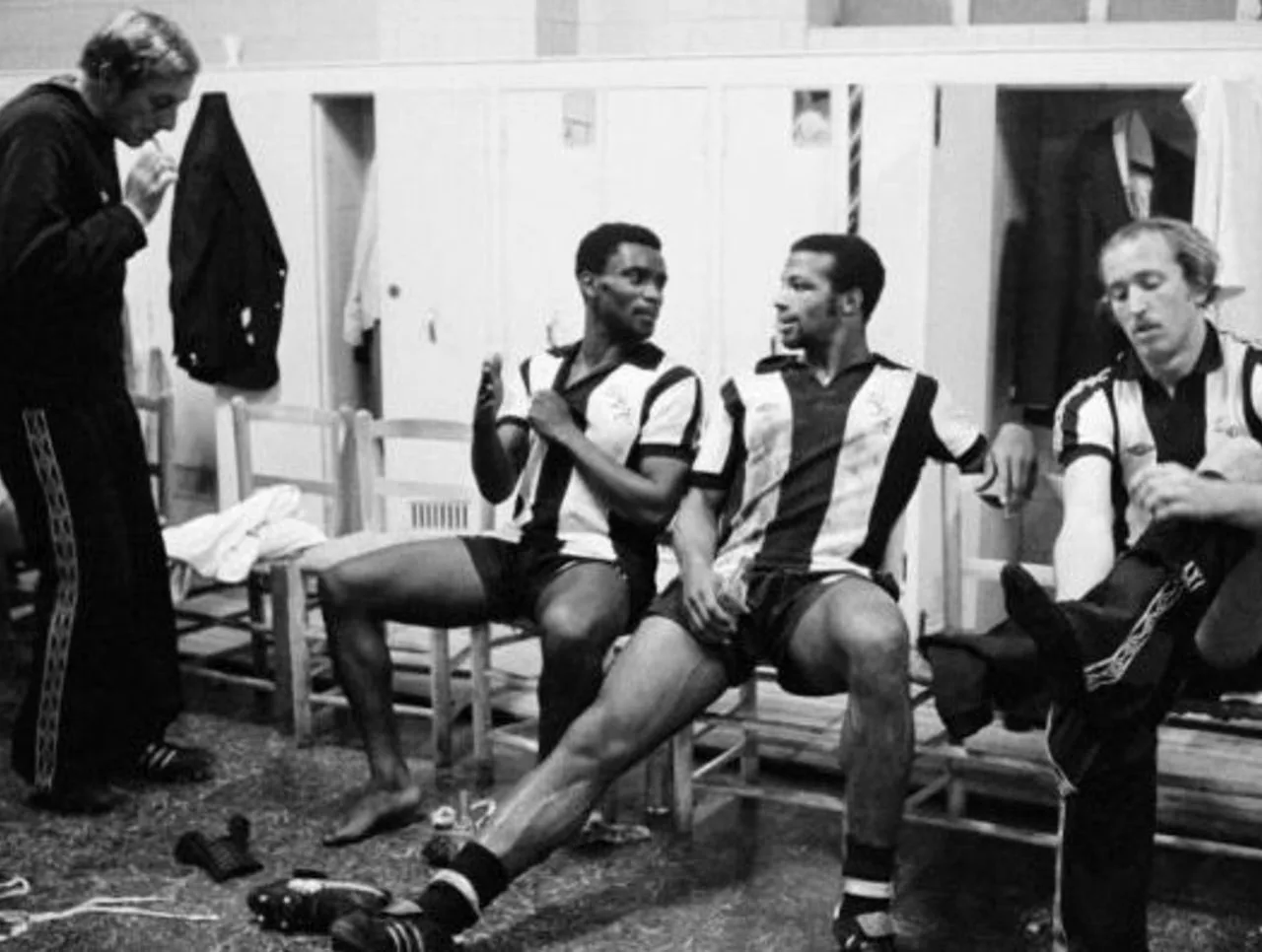
My own book occupies a space between these two traditions. Avalanche in the Snow borrows its frame from the American shelf – a single First Division match, Manchester United against West Bromwich Albion at a snowbound Old Trafford in December 1978, meticulously chronicled in vivid detail. Within this frame, however, the instincts are more Hopcraft than Bowden. My book examines a magical afternoon of football from all sides: the brilliant, mercurial play of Laurie Cunningham, Cyrille Regis, Bryan Robson, Jimmy Greenhoff and Steve Coppell; managers Ron Atkinson and Dave Sexton, pictures of flamboyance and restraint on the touchline; how the bold, attack-minded tactics turned a frozen pitch into a spectacle; and the supporters savoring the snow-dusted performance from the stands.
It is an American form with an English interior, built around a league fixture that earned neither side a trophy yet gave everyone at Old Trafford a lifetime of memories.
Avalanche in the Snow is available in hardcover starting 1 February 2027. Preorder a copy here.